


Search Engine Optimization in Google Analytics
 Is Google really going to help us with our SEO?
1. Query Reports
The query report lists the top 1000 queries along with number of impressions, clicks, average position and click-through rate (CTR). Users familiar with Webmaster Tools will recognize the layout, although it feels cleaner in Google Analytics.
One thing that looks out of place is “average position.” Most people think of average position in Google’s search results to mean “rank”, but this is not the same thing. For example, our Queries report shows SEOmoz’s average position for the word “seomoz” is 3.5. Huh?
You don’t need to be the SEO of SEOmoz to know that we rank #1 for our brand term. Even if we saw advertisements above our name (we don’t) or odd vertical results, any reasonable person could tell you we rank #1.
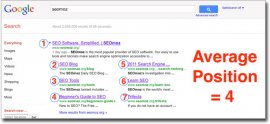
But Google doesn't display rank. Instead, they record the position of each impression. With a 6 Pack of results, SEOmoz appears 7 times for each query. This means the average position is 4 for this particular result.
From Google’s Webmaster Help.
“To calculate average position, we take into account the ranking of your site for a particular query (for example, if a query returns your site as the #1 and #2 result, then the average position would be 1.5).”Is this useful? I’d rather Google display the highest position when showing us this data, which would present a more actionable metric to webmasters.
PRO Tip – Finding Opportunities in the Queries Report
To discover optimizing opportunities, you can use advanced filters to find keyword queries that:
- Send you a good amount of traffic
- You rank for, but...
These are "golden" keywords. Since these queries already send you visits, a small gain in rankings could lead to big gains in traffic. Not all keywords should be optimized – it’s important to know your conversion data here. For example, the report tells us that SEOmoz receives a lot of accidental traffic for the phrase “cute pictures'. This is not a keyword we need to optimize for.
The only problem is the query report does not tell you what page these queries are landing on, so you have to perform extra work to find this information out. That, and the “average position” metric isn’t as useful as rank.
Not to tout our own products, but you can also find these keywords with the SEOmoz PRO platform, which displays your actual keyword ranking and the URLs that rank for the keyword phrase. It's easy and saves me a ton of time.
2. Landing Pages Report
The Landing Pages report shows how many times your top landing pages were shown in search results, again along with average position and CTR.
Average position isn’t as useful in this report, as you don’t know the exact search query, but it does paint a picture of your search visibility.
PRO Tip – Optimize for CTR
Again you can use advanced filters to find landing pages with:
- High number of impressions
- High average position
- Low click-through rates.
Look at these URLs for title tags and meta descriptions. Is there anywhere you could improve how the results display in the SERPS? Often, there is a very good reason for low CTR outside your control, especially when search engines show search results that don’t match user intent.
My biggest wish for this report would be for it to display landing pages and queries together. You can find these in other parts of GA, but right here would be ideal.


