Latest SEO Articles
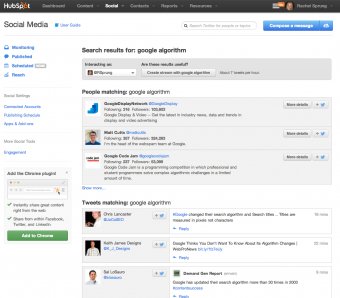 Your search results will appear as shown below. The section at the top will show you people you can follow who are talking about your search term. The tweets at the bottom will show people who have mentioned your search term.
When you're ready to create a stream in Social Inbox based on your results, click "Create stream with google algorithm" ... or whatever your search term is ... at the top. Note that you will also be able to see how many tweets you should expect per hour.
2) Subscribe to SEO blogs.
 Whenever there is a major SEO change, SEO blogs light up with informational content that helps the rest of the world make sense of it all. Set up your RSS feed - or subscribe via email - to make sure you don't miss anything. You may see some articles that delve too much in the nitty gritty for your taste, but that's alright - ignore those, and just focus on the posts that let you know about new trends and recent updates that impact how you do your job.
If you want to take this a step further, set up a Google Alert for some of the same SEO terms that you used to create your Twitter stream. This will ensure that you find out either immediately, daily, or weekly, depending on your preferences.
 Here are a few fantastic SEO blogs that you can use to start off your RSS feed or email subscriptions:
3) Stay up to date with Google Webmaster Tools.
Google Webmaster Tools aren't just a way for people to make sure their sites are properly optimized. Yes, it does that, but it also has a series of resources that explain SEO best practices to you. You can find out information about SEO, how Google crawls your site, and much more.

Google Webmaster Tools can also provide detailed information about your site's performance, including your search queries, internal links, keywords you rank for, and more. For more details about everything you can do with these tools, check out this post.
4) Put 15-30 minutes aside each week to learn.
If you really want to stay in the "know" about everything SEO, it's important to put some time aside to actively consume the information. If you have more than 15-30 minutes a week to do so, that's great, but a weekly check-in should help you stay relatively current.
If you want to do deeper dives, you probably need to budget more time for yourself. Either way, block off some time on your calendar to make sure you put the resources you've gathered to good use.